Modeling Immunotherapy Diagnostics Through Machine Learning
 Pfizer Computational Biology and Bioinformatics Award
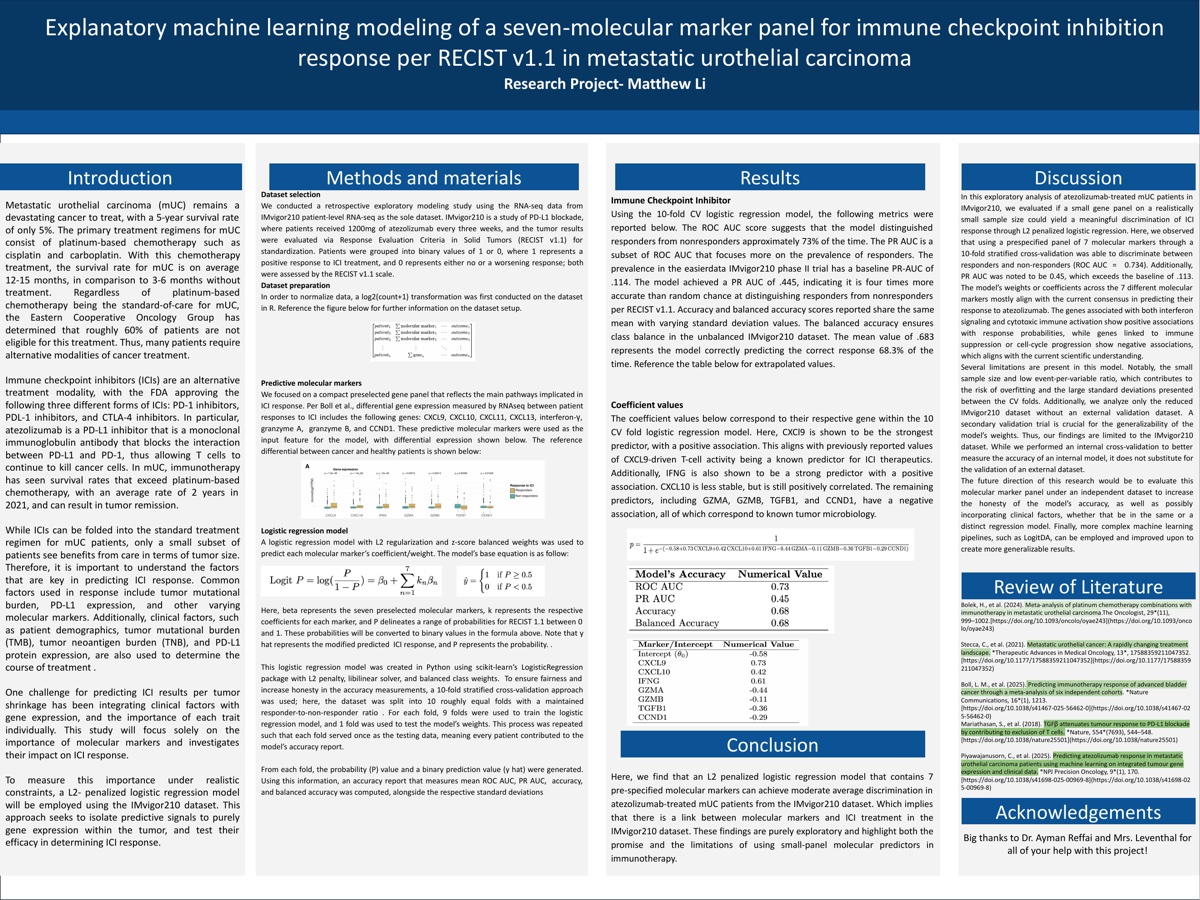
Immunotherapy treatment has been folded into the standard of care for metastatic urothelial carcinoma (mUC) (1). Immunotherapy, and more specifically immune checkpoint inhibition (ICI) has been known for its lower rate of side effects (2) (3); however, only a small subset of patients exhibits any benefit (4). Prior work has evaluated complex genetic signatures, tumor mutational burden (TMB), clinical factors, and multi-omics machine learning models in this setting (5) (6); however, the performance of a small molecular marker panel under realistic sample sizes is less represented. Here, we used the RNA-seq and RECIST v1.1-derived patient outcomes data from a subset of the phase II IMvigor210 dataset (7) (8) (n=193). The RNA-seq data for a prespecified panel of seven molecular markers was used in an L2-penalized logistic regression model. The model’s results indicated positive relationships between the following molecular markers and shrinkage according to tumor burden: CXCL9, CXCL10, and IFN-γ, and negative relationships with the following: GZMA, GZMB, TGFB1, and CCND1. The model’s overall accuracy in distinguishing cases between positive and negative outcomes was 0.683, with the ROC AUC/PR AUC values being 0.734 and .445, respectively, reflecting the constraints of the small cohort (n=193).
 Open poster PDF